
Introduction
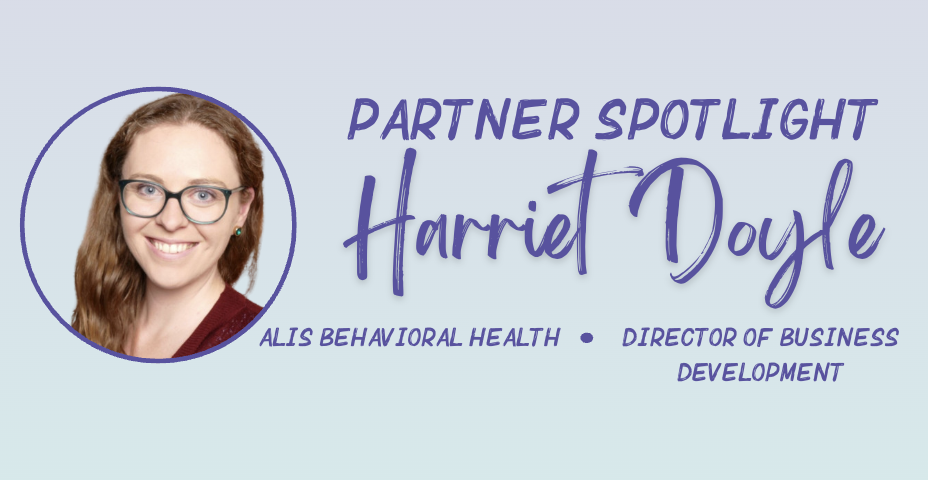
Every quarter, the Soulful Team highlights some of our favorite community partners. We’re honored to sit down and connect with the Director of Business Development, Harriet Doyle. As you will read, Harriet is one of the many bright lights in the behavioral health industry. Her expertise in connecting teens with treatment options in Colorado is fueled by passion, devotion and strong community relations. Learn more about Harriet below.
What brought you into your work at Alis BH?
I worked as an executive assistant in the SUD world and I’ve always had a passion for working in treatment. The work that I did in SUD helped me make great connections within the industry, build my network and connect with Alis. When I wanted to transition into a BD/client facing role, I had this opportunity to meet the Alis team, learn about what they do and how we can impact kids struggling with mental health.
How has your role shaped you personally and professionally?
It’s shaped me in understanding how the institutional systems work and impact all of the functions and services we want to build. It’s been profoundly rewarding to help teens and their families receive the support they need while working with a bunch of agencies geared toward the same goal.
What does mental health mean to you today?
Mental health means people caring for people. It’s more than stopping by a doctor’s office for a shot. It’s about learning someone’s stories, fears, goals, and how to help them overcome their obstacles. If you have a broken leg, you usually don’t need to know their back story. In Mental health, it’s a journey in understanding what treatment approach fits their needs. This is great because a lot of people get involved to help change a person’s life. Mental health is also an emerging industry. Hospital systems are solidified in their practices but we get to figure out idiosyncratic approaches that might work for an individual’s needs.
How do you maintain boundaries and balance at Alis?
I firmly believe that we’re a working relationship. Although my coworkers feel like family, I keep professionalism first, so when we need to have hard conversations, it’s coming from a coworker. I don’t like muddling these lines. It’s also very important for me to find outlets to remain balanced. I can compartmentalize in the moment and work out, or go for a walk later to help me navigate some of the difficult emotions.
What advice would you give someone just entering the mental health field?
I would tell them to make intentional connections with people. Whether it’s alternative resources for clients, colleagues you like, billing systems to know, etc… It’s imperative to build your professional community. It might be overwhelming and so you don’t have to go to every networking event all the time, but I cannot understate the value of building relationships that span all of the different areas of the behavioral health industry.
How do you avoid burnout?
I’ll go back to the boundaries question. I don’t overwork myself to the breaking point, I’ll hit a point or goal that I’ve set and then take some time to decompress. I like to be aware of how my energy is being used and then find a way to recoup my energy at a later time when needed. It’s also important to have things to look forward to in the future that help keep you going.
What do you do for fun or when you’re not at work?
People ask me this a lot, and I’m pretty awful at answering this question. I love walking and being outside. I also love to cook and work on my house. Whenever I have some time in my place to organize the house or do some interior design, it’s great. I also love to read non fiction books, whether it’s biographies or business, I absolutely love to read.