
Introduction
Supporting someone through addiction can feel overwhelming, emotional, and at times uncertain. The truth is, there is no perfect script, but there are meaningful ways to show up that can make a real difference. Research shows that family and social support can play a powerful role in helping someone enter and stay in recovery, as noted by the Substance Abuse and Mental Health Services Administration.
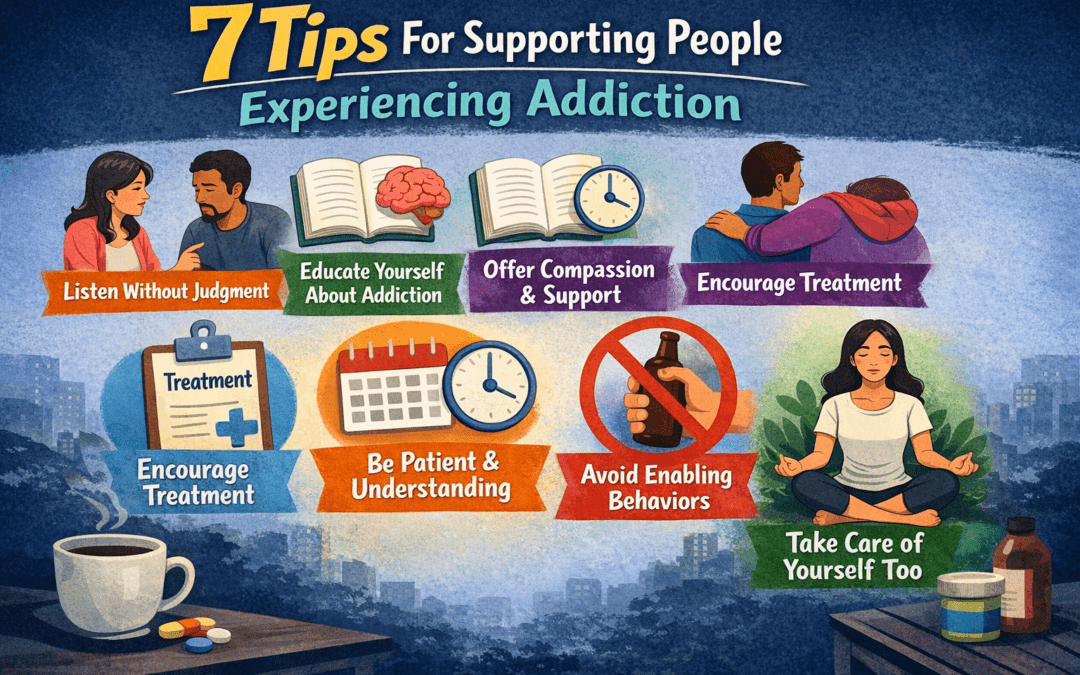
Here are seven supportive and practical ways to help someone you care about.
1. Lead with empathy, not judgment
One of the most important things you can offer is a sense of safety. Addiction often comes with shame, and judgment can push people further away. TheSAMHSA guide on helping someone emphasizes that simply being present and listening without judgment can be a powerful first step. When people feel understood, they are more likely to open up.
2. Educate yourself about addiction
Understanding addiction as a health condition rather than a moral failing changes how you respond. TheNational Institute of Mental Health explains that substance use and mental health are often connected, and both may need support. Learning about this can help you respond with compassion instead of frustration.
3. Set clear and healthy boundaries
Supporting someone does not mean sacrificing your own well being. Healthy boundaries protect both you and your loved one. Boundaries might include not providing money, not covering up behaviors, or stepping away when interactions become harmful. These limits create accountability while still showing care.
4. Encourage treatment, but avoid forcing it
You can encourage help, but you cannot force change. Support might look like offering to research programs, attending an intake call, or simply planting the seed. According to the government substance use resource page, access to treatment and support services is key to recovery, but engagement must come from the individual. Patience is essential here.
5. Take care of yourself too
Supporting someone in addiction can be emotionally draining. It is important to care for your own mental and physical health. Research shows that caregivers often experience stress and burnout, making self care a necessary part of the process. You are better able to support someone else when you are supported yourself.
6. Stay consistent and reliable
Recovery is rarely a straight line. There may be progress, setbacks, and everything in between. Showing up consistently builds trust over time. This might mean checking in regularly, following through on what you say, and remaining a steady presence even during difficult moments.
7. Celebrate small wins
Change often happens in small steps. A conversation, a therapy session, or even a moment of honesty can be meaningful progress. Recognizing these moments helps build confidence and motivation. Positive reinforcement can be more impactful than criticism when it comes to behavior change.
At Soulful Recovery, these principles are woven into how support systems are built around each client. Virtual intensive outpatient programs create space for both individuals and families to stay engaged in the recovery process. Education and connection are also emphasized through resources like the Soulful Recovery blog, where families can learn how to navigate recovery with more clarity and confidence.
In addition, flexible care options such as telehealth addiction treatment allow loved ones to stay involved without barriers like travel or scheduling challenges. This accessibility can make a meaningful difference in maintaining consistent support.
Concluding Thoughts
Supporting someone in addiction is not about having all the answers. It is about showing up with patience, compassion, and a willingness to learn. When you combine clear boundaries, emotional support, and access to the right resources, you create an environment where recovery has room to grow.
Even on the hardest days, your presence matters more than you may realize.