Introduction
SMART Recovery is a science based approach to addiction recovery that focuses on self empowerment, practical tools, and long term behavior change. The name SMART stands for Self Management and Recovery Training, and it reflects the core idea that individuals can learn skills to manage their thoughts, emotions, and behaviors in a way that supports lasting recovery.
Unlike some traditional models, SMART Recovery is not built on a single philosophy or belief system. Instead, it draws from evidence based practices such as cognitive behavioral therapy and motivational interviewing. According to the official SMART Recovery website, the program is designed to help people build and maintain motivation, cope with urges, manage thoughts and behaviors, and live a balanced life.
The Foundation of SMART Recovery
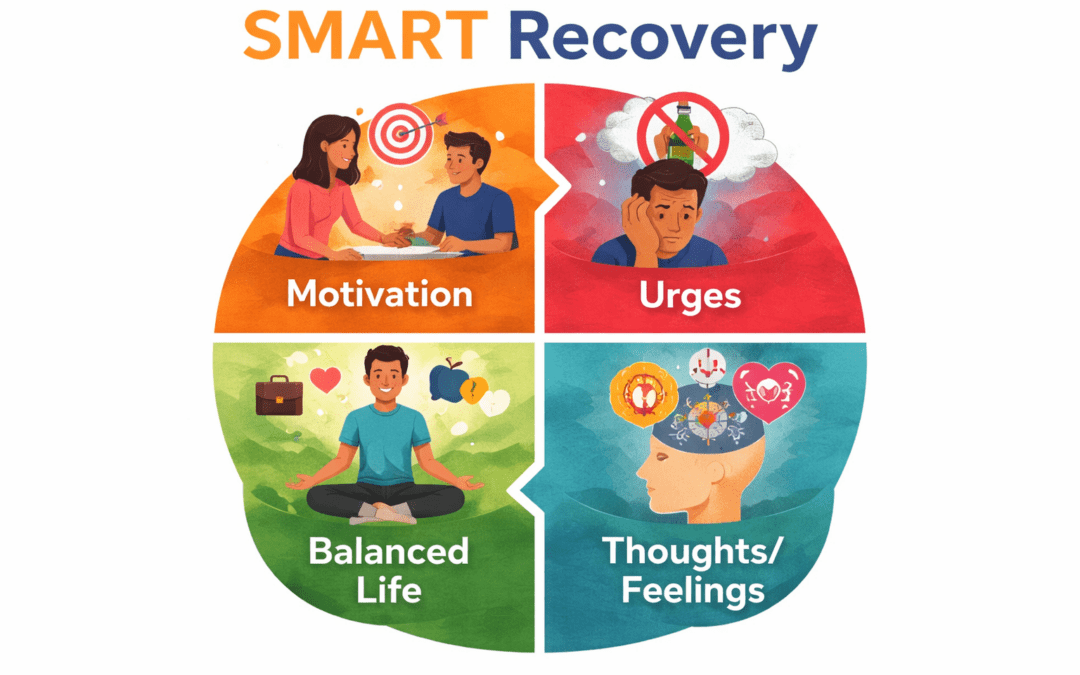
At the heart of SMART Recovery is a four point program that guides individuals through the recovery process. These points include building motivation to change, coping with urges, managing thoughts and feelings, and creating a balanced and healthy life. This structure gives participants a clear and practical framework to follow while still allowing flexibility based on individual needs.
Research supports the effectiveness of these types of approaches. The National Institute on Drug Abuse highlights that behavioral therapies such as cognitive behavioral therapy can help individuals modify attitudes and behaviors related to substance use while increasing healthy life skills. SMART Recovery incorporates these principles in a way that feels approachable and actionable.
How SMART Recovery Meetings Work
SMART Recovery meetings are typically group based and led by trained facilitators. These meetings are collaborative rather than hierarchical, meaning everyone is encouraged to participate and share. The focus is on learning tools, practicing skills, and supporting one another in a respectful and non judgmental environment.
Meetings often include discussions about real life challenges, exercises to reframe thinking patterns, and strategies to handle cravings or triggers. The emphasis is on the present and future rather than focusing heavily on past experiences. According to the Substance Abuse and Mental Health Services Administration, peer support and skill building are key components of successful recovery, both of which are central to SMART Recovery.
SMART Recovery Compared to Other Models
One of the key differences between SMART Recovery and more traditional programs is its focus on self reliance and personal choice. While some recovery models emphasize surrender or lifelong identity labels, SMART Recovery encourages individuals to see themselves as capable of change and growth.
This approach can be especially appealing for individuals who are looking for a more flexible or secular option. It allows participants to define their own recovery goals and measure success in a way that feels meaningful to them.
That said, many people benefit from combining different approaches. Recovery is not one size fits all, and having multiple pathways can increase the likelihood of long term success.
The Role of SMART Recovery in Modern Treatment
SMART Recovery is often used alongside professional treatment programs, including outpatient and virtual care. It can complement therapy, medication support, and other evidence based services by providing ongoing tools and peer connection.
Virtual intensive outpatient program integrate structured care with flexible support options, allowing individuals to explore different recovery pathways that align with their needs. This type of environment creates space for both clinical guidance and personal empowerment.
Lastly, resources such as Soulful Recovery telehealth services make it easier for individuals to access support from anywhere, which can be especially helpful for those participating in virtual SMART Recovery meetings.
Is SMART Recovery Right for You
SMART Recovery can be a great fit for individuals who are looking for a practical, skills based approach to recovery. It is especially helpful for those who value independence, want to understand the science behind addiction, and prefer a collaborative group environment.
At the same time, it is important to remember that recovery is deeply personal. What works for one person may not work for another, and it is okay to explore different options until you find what feels right.
Concluding Thoughts
SMART Recovery offers a supportive and empowering path for individuals seeking change. By focusing on practical tools, self awareness, and personal growth, it helps people build a foundation for lasting recovery. When combined with professional support and a strong community, it can be a powerful part of a well rounded recovery journey.
No matter where someone starts, the most important step is reaching out and staying open to support. Recovery is possible, and there are many paths that can lead there.