
Introduction
When people think about wellness, they often focus on physical health. While exercise, nutrition, and sleep are certainly important, wellness is much broader than physical wellbeing alone. True wellness includes multiple areas of life that work together to create balance, resilience, and overall quality of life.
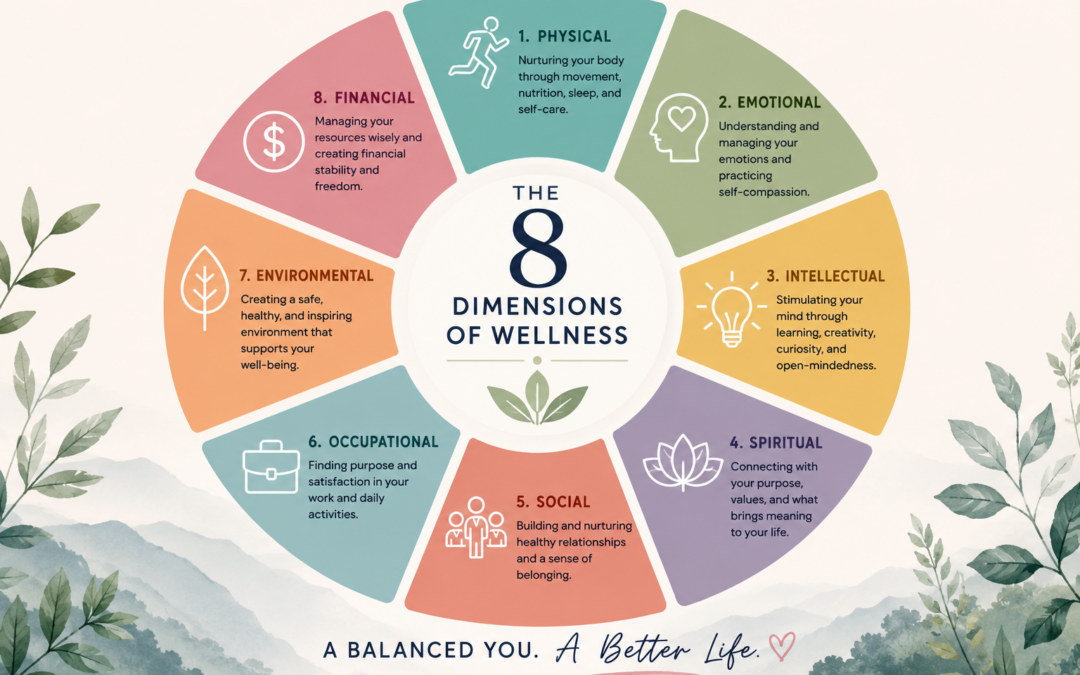
The concept of the 8 dimensions of wellness recognizes that health is interconnected. Emotional wellbeing can affect physical health. Financial stress can influence mental health. Social relationships can impact recovery outcomes. When one area struggles, other areas often feel the effects as well.
For individuals in recovery, understanding wellness from a whole person perspective can be especially valuable. According to SAMHSA’s recovery resources, recovery involves improving health, creating purpose, building supportive relationships, and developing a meaningful life. The 8 dimensions of wellness provide a framework for achieving those goals.
Emotional Wellness
Emotional wellness involves recognizing, understanding, and managing feelings in healthy ways. It does not mean avoiding difficult emotions. Instead, it means developing the skills needed to navigate challenges without becoming overwhelmed.
Many individuals in recovery spend time learning how to respond to stress, anxiety, sadness, or frustration without turning to substances. Healthy coping strategies can improve resilience and support long term recovery.
The importance of emotional growth and self awareness is discussed in Soulful Recovery’s article on Key Principles of Addiction Recovery, which highlights personal growth as a central part of healing.
Physical Wellness
Physical wellness includes caring for the body through movement, nutrition, hydration, sleep, and preventive healthcare. Addiction can affect physical health in many ways, making this dimension especially important during recovery.
The National Institute on Drug Abuse treatment resources explain that treatment helps individuals regain healthy functioning in their lives and supports overall wellbeing.
Physical activity can be an important component of recovery. Soulful Recovery explores this topic in Exercise in Addiction Recovery, which discusses how movement can support mood, reduce stress, and improve overall wellness.
Social Wellness
Humans are wired for connection. Social wellness focuses on developing healthy relationships and maintaining meaningful support systems.
Recovery often involves strengthening positive relationships while creating distance from relationships that may contribute to unhealthy behaviors. Supportive family members, friends, therapists, peer groups, and recovery communities can all play a role in social wellness.
Strong connections provide encouragement, accountability, and a sense of belonging that can make recovery more sustainable over time.
Intellectual Wellness
Intellectual wellness involves engaging the mind through learning, creativity, curiosity, and personal growth. This dimension encourages people to challenge themselves, explore new interests, and continue developing throughout life.
Recovery often creates opportunities to rediscover passions that may have been neglected during active addiction. Reading, education, hobbies, skill development, and creative pursuits can all contribute to intellectual wellness.
Keeping the mind engaged can also help individuals develop healthier routines and a stronger sense of purpose.
Occupational Wellness
Occupational wellness refers to finding meaning and satisfaction in work, education, volunteering, caregiving, or other productive activities. It is not necessarily about income or career status. Instead, it focuses on whether daily activities provide a sense of contribution and fulfillment.
The National Institutes of Health resource on substance use disorder treatment emphasizes the importance of rebuilding important life domains during recovery, including work, relationships, and community involvement.
Meaningful activities can help create structure, confidence, and motivation for continued growth.
Financial Wellness
Financial wellness involves managing resources responsibly and reducing unnecessary financial stress. Substance use can sometimes create financial challenges that take time to address during recovery.
Developing healthy financial habits such as budgeting, saving, paying bills consistently, and setting realistic goals can improve both stability and peace of mind.
Financial wellness is not about perfection. It is about making progress toward greater security and confidence.
Environmental Wellness
Environmental wellness focuses on creating surroundings that support health and wellbeing. This includes living spaces, workplaces, communities, and the people who make up those environments.
A healthy environment can reduce stress, encourage positive habits, and support recovery goals. Simple changes such as maintaining an organized living space, spending time outdoors, or limiting exposure to unhealthy influences can make a meaningful difference.
Creating supportive environments often reinforces many of the other dimensions of wellness.
Spiritual Wellness
Spiritual wellness involves finding meaning, purpose, values, and connection. For some people this may involve religious beliefs. For others it may involve nature, service, personal values, meditation, or relationships.
Spiritual wellness helps individuals identify what matters most to them and provides a sense of direction during difficult times.
Long term growth often requires continued support and reflection. Soulful Recovery discusses this process in Aftercare Plans in Recovery, which explains the importance of maintaining purpose and support after formal treatment ends.
Wellness And Recovery Work Together
The 8 dimensions of wellness are not separate boxes that exist independently. They influence one another every day. Improved physical health can support emotional wellbeing. Better financial stability can reduce stress. Strong social connections can strengthen recovery.
The SAMHSA recovery framework emphasizes that recovery is built upon health, purpose, home, and community. These principles align closely with the broader wellness model and remind us that healing involves the whole person.
Concluding Thoughts
The 8 dimensions of wellness provide a practical framework for building a healthier and more balanced life. Emotional, physical, social, intellectual, occupational, financial, environmental, and spiritual wellness each contribute to overall wellbeing.
Recovery is not simply about avoiding substances. It is about creating a life that feels meaningful, connected, and sustainable. By paying attention to all dimensions of wellness, individuals can build a stronger foundation for long term recovery and personal growth.
Small improvements in any area of wellness can create positive momentum. Over time, those small changes can lead to significant transformation and a greater sense of fulfillment.