Introduction
Addiction recovery involves far more than simply stopping substance use. It often requires learning entirely new ways to cope with stress, manage emotions, and build healthier relationships. Many individuals struggling with substance use disorders describe feeling overwhelmed by intense emotions or impulsive reactions. Dialectical Behavior Therapy, commonly known as DBT, offers practical tools that help people respond to those experiences in healthier ways.
DBT is a skills based therapy developed by psychologist Marsha Linehan that focuses on balancing acceptance and change. Instead of simply discussing problems, DBT teaches concrete skills that individuals can use in everyday life to regulate emotions, tolerate distress, and make thoughtful decisions.
Research published through the National Institutes of Health discussing Dialectical Behavior Therapy for substance use disorders explains that DBT interventions have been associated with reductions in substance misuse and improvements in treatment engagement among individuals with substance use challenges and co-occurring mental health conditions.
Because addiction is frequently connected to emotional regulation difficulties, DBT skills can become powerful tools for navigating cravings, triggers, and stressful life events.
Why Emotional Regulation Matters In Addiction Recovery
Emotional regulation plays a major role in recovery. Many individuals turn to substances as a way to escape overwhelming feelings such as anxiety, shame, anger, or sadness. Without healthy coping strategies, these emotions can quickly lead to relapse risk.
The National Institute of Mental Health research on emotion regulation in DBT treatment highlights that DBT can significantly improve emotional regulation, which is closely linked to reductions in harmful behaviors.
When people learn to identify and regulate their emotional responses, they gain the ability to pause before reacting. That pause creates an opportunity to choose healthier coping strategies rather than automatically turning to substances.
This awareness is a foundational part of many recovery programs and therapeutic approaches.
The Four Core DBT Skill Areas
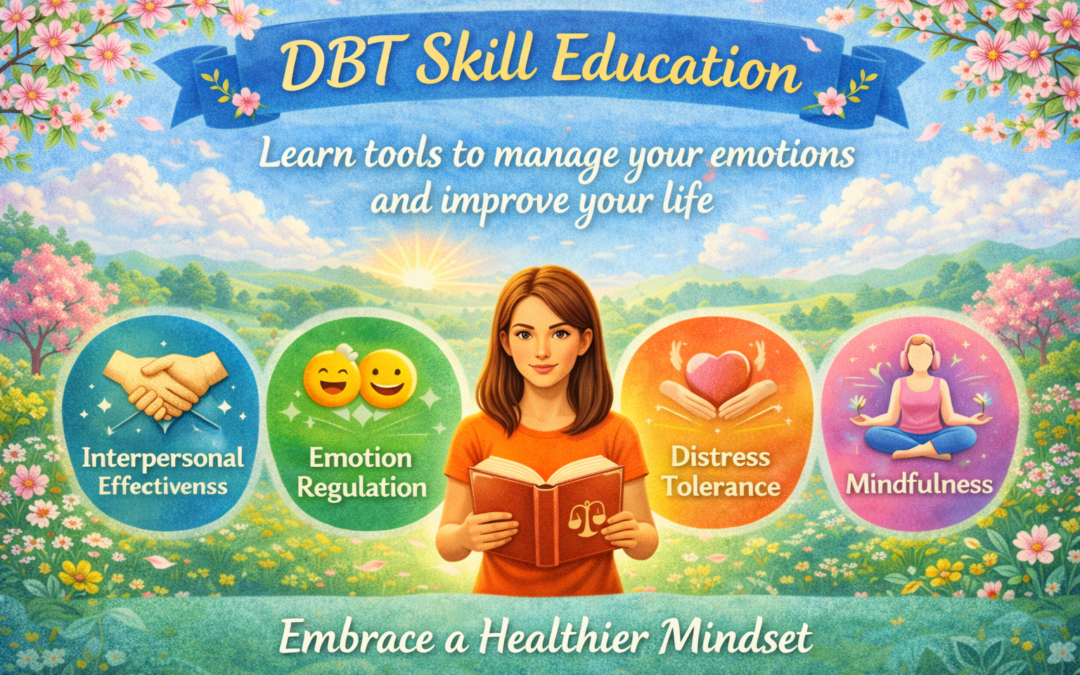
DBT is built around four major skill categories that work together to help individuals manage life challenges more effectively.
Mindfulness is the first skill area. Mindfulness helps individuals become aware of their thoughts, emotions, and physical sensations without reacting immediately. In addiction recovery, mindfulness can help someone notice a craving without acting on it.
Distress tolerance skills teach people how to handle painful or stressful moments without turning to substances. Instead of trying to eliminate distress immediately, these techniques focus on safely navigating difficult emotional experiences.
Emotion regulation skills help individuals understand why emotions occur and how to reduce emotional vulnerability. Research exploring DBT skills training programs published through the National Library of Medicine suggests that these interventions can improve emotional regulation and reduce impulsive behaviors.
Interpersonal effectiveness is the fourth skill category. These skills help individuals communicate clearly, set boundaries, and maintain relationships that support recovery.
Together, these four areas provide a structured system for managing the emotional and social challenges that often accompany addiction recovery.
Why DBT Skills Are Especially Helpful For Addiction
Addiction frequently develops as a way to cope with emotional pain. When substances become the primary method for regulating stress or discomfort, it can be difficult to imagine healthier alternatives.
DBT addresses this challenge directly by teaching practical strategies for managing emotional distress. Instead of avoiding difficult feelings, individuals learn to experience those emotions safely while still making healthy decisions.
Research summarized in a National Library of Medicine review on Dialectical Behavior Therapy effectiveness shows that DBT based interventions can improve mood stability and reduce impulsive behaviors across several clinical populations.
These improvements are particularly important in addiction recovery because impulsive decision making and emotional overwhelm are common relapse triggers.
By practicing DBT skills regularly, individuals gradually build healthier behavioral patterns that replace the cycle of emotional distress and substance use.
Practicing DBT Skills In Daily Life
One of the strengths of DBT is that it focuses on practical application. Instead of only discussing emotions in therapy sessions, participants actively practice the skills in everyday situations.
For example, mindfulness exercises may involve noticing breathing patterns during stressful moments. Distress tolerance strategies might include grounding techniques that help individuals stay present when emotions spike.
These practical tools allow people to interrupt automatic reactions and choose healthier responses.
Readers interested in learning more about these techniques may find helpful insights in DBT Skills For Addiction Recovery on the Soulful Recovery blog, which explores how these skills are applied in recovery settings.
DBT And Long Term Recovery Support
While DBT skills can be learned in therapy, they become most powerful when practiced consistently in everyday life. Many treatment programs integrate DBT into group therapy, individual counseling, and recovery education because the skills are easy to apply in real world situations.
Structured treatment environments also help individuals practice communication and coping skills in supportive settings.
For example, the article Benefits of Virtual Addiction Treatment on the Soulful Recovery blog discusses how flexible treatment programs allow individuals to learn coping skills while maintaining work, family responsibilities, and community involvement.
Recovery is also strengthened by healthy relationships and supportive communities. Family involvement often plays an important role in long term success, which is explored further in How Family Support Helps Addiction Recovery on the Soulful Recovery blog.
Concluding Thoughts
Addiction recovery requires more than avoiding substances. It involves developing emotional awareness, building resilience, and learning new ways to respond to life challenges.
Dialectical Behavior Therapy provides a structured approach to building these skills. By teaching mindfulness, distress tolerance, emotion regulation, and interpersonal effectiveness, DBT helps individuals navigate difficult emotions without returning to harmful coping patterns.
Scientific research continues to demonstrate that DBT can reduce impulsive behavior and improve emotional stability among individuals facing substance use and mental health challenges.
For many people in recovery, DBT skills become everyday tools that support healthier decisions, stronger relationships, and long term personal growth.